The “Bi-Polar” Bear 2019 – good and ugly faces of the bear..
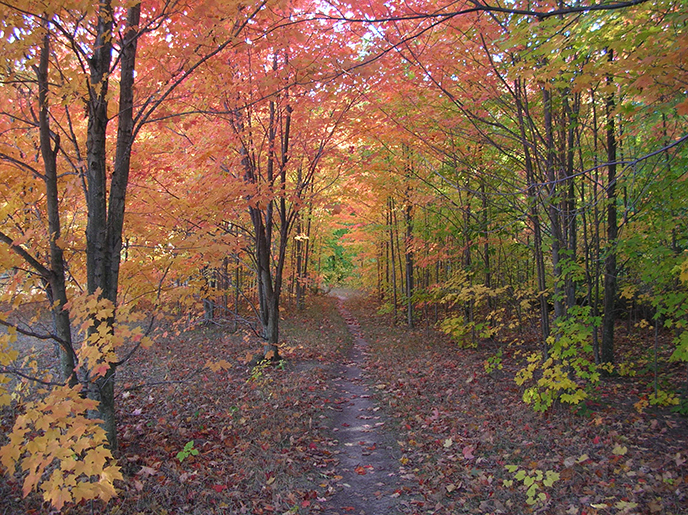
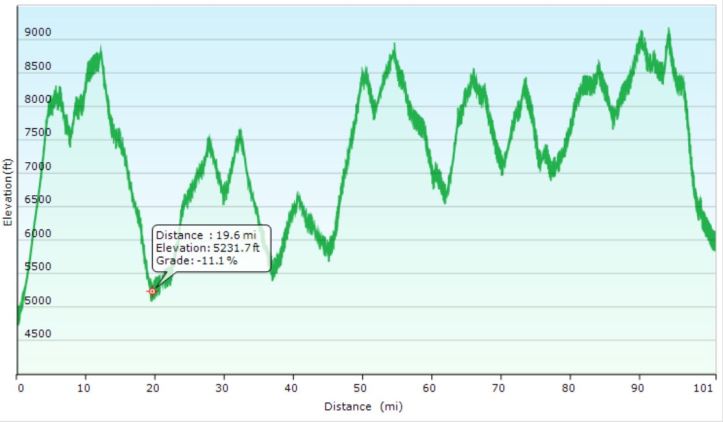
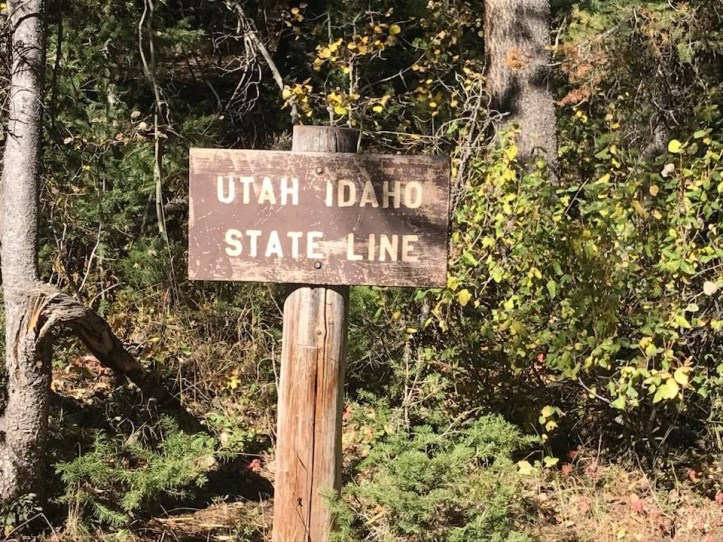
Bear 100 was the most memorable running experience for me in 2019 and I am still processing all the thoughts. After having a great running year in 2018, I had signed up for “The Bear 100” 2019 while preparing my race calendar. Most of us look for some challenges to fulfill our so-called unfulfilled life. I knew Bear is one of toughest 100 miles footrace in US and quite infamous for its long climbs (~23,000 ft climb), downhills (~22000 ft) and unpredictable weather conditions. It’s a great low-profile race but very well managed and a qualifier for Hardrock (only selected few qualifiers), UTMB (6 points) and Western States. It attracts lot of competitive ultrarunners in the country. Almost every year, Bear has very difficult and inclement weather conditions (heat, cold, rain, snow, hails, thunder) and course is extremely muddy (slippery) if it rains. The best part is you get to see all the beautiful fall colors when leaves are changing their colors on golden aspen and red maple trees in remote forest and it traverses through Logan, Utah to Fish Haven, Idaho (point to point race).
However around June/July, I wasn’t sure whether I could toe the line for Bear 100. First – the race was definitely intimidating for me J and Second – I wasn’t sure if I could take the time off as race starts on Friday and ends on Saturday. After having really stupid DNF at TRT 100, I was charged up to punish my legs and just focus on the races that I had signed up irrespective of whether I will run Bear or not.
Training –
I decided to approach my training for this in a little different way to accommodate lack of time for my training runs. It wasn’t “Perfect” but at the end I felt physically quite strong and could do most of the same climbing efforts with very less HR.
Climbs and overall strength – I read Ultrarunning book couple years back by Jason Koop and I always believed Koop since then as he said “if you want to get better at running, you have to focus primarily on running than any cross training” which I disagree now. Early part of the year, I had some niggles and minor injuries and I couldn’t be consistent in training just because I was totally relying on “Running”. One has to be absolutely ready with all the massive climbs that Bear has and I thought I will need stronger leg muscles along with strong cardio machine. I added 2-4 days of strength training and had to take Yoga/Pilates out to compensate for time. I strongly believe now that doing at least all three (running, strength, yoga/pilates/plyometrics/swimming), definitely makes you a versatile, strong, fast and injury free runner. During strength training, I focused mostly on leg muscles, shoulders, back/core. Secondly while reading, Kilian’s article on how he and other ultrarunners prepare for high-elevation races, I have realized that running uphill in training (or training races) should be must. I employed hill runs in shorter workouts and then in many training 50Ks. This made most of my uphill climbs extremely comfortable despite the grade and I started feeling strong on climbs. All the repeats of Mission Peak along with SOB group were extremely helpful.
Distance – with lack of time, best bet to train for this was to include back to back ultras/long runs. Despite running with Plantar Fasciitis from Aug 2018, my recovery has been remarkably well from long and hard efforts. I also did few long runs even on weekdays whenever I got time. I felt ready for the distance despite my low weekly mileage and few sporadic low weeks.
Night runs – I like to run my races without pacers and crew with my own free will. I used to love night running but lack of night runs in last 8-9 months, made me little uncomfortable to go through night in wilderness all alone. I did a night marathon and started doing early morning runs to make myself again comfortable with running in dark. I thought I may run night section with some fellow racers (that didn’t happen though in the race this time)
Weather conditions/gear (missed training on this)– My body was very well acclimated with heat after having done many races and I always loved running in rain and cold so I totally ignored this. Secondly, I didn’t test all my cold and running gear which was a big mistake for this kind of race where everything blows out of proportion very soon.
Technical Terrain (some training during summer and spring season)– Bear has many technical sections and lots of rocky single tracks. I had heard stories of muddy terrain and I had done many muddy hilly races but I never expected the kind of mud/slippery terrain that race has shown on the race night and second day. I thought I could handle it but this exposed the biggest weakness for most of the runners.
Mental training – All this physical training made me stronger but I knew I am really poor in this section. I read through lot of stories, spent some time trying to find a real purpose but honestly even before the race, I wasn’t conditioned and always doubted me. With lack of purpose, I decided to run with as many low points as possible (run easy, proactive problem solving). I kept few mantras which definitely helped me not to decide about DNF and also few usual strategies to go from aid to aid and stay in the moment.
Following were my key training building blocks
- Strength Training (2-4 days/week depending on time and focused on only few muscle groups)
- Back to back long runs (Hilly 50Ks on Sat/Sun with varying effort)
- Uphill running (started in short runs then to hilly 50Ks
- Mission Peak repeats with SOB (1-4 MP repeats whenever possible)
- Night runs or early morning runs
- Focus on long runs and not worry too much about weekly mileage
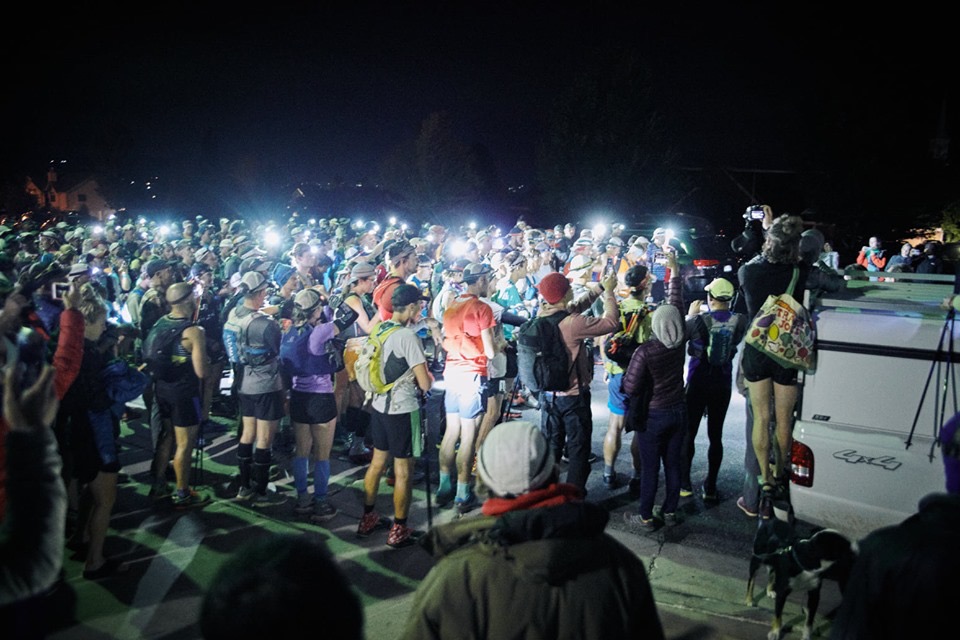
Race Day – I had no clear goal in terms of time as I just wanted to finish under 36 hours. My strategy was to reach aids 3 hours before cutoffs at least till halfway and keep my effort as easy as possible. I was more experienced and aware this time with the damage that happens during long ultras so I hedged my risks of chaffing and blisters by fully taping my feet and using body glide/SNB more often. It worked great. I also reminded myself to treat my body well with nutrition and hydration on point. Weather plays a very big role on this course profile and I couldn’t imagine how much havoc it can inflict on runners until I found it during the race. I also miscalculated few things, took few chances with the gear and they made some parts of the race extremely uncomfortable. We knew it was going to rain and probably snow at high points. Luckily blizzard and very bad snowstorm got pushed by a day but rain stayed on the course – little on the first day but it made second day very miserable with all the mud, extremely slippery slopes, sheer cold.
Only few but big mistakes
- Trekking poles – can’t emphasize enough importance of poles during rain in this race. It’s almost impossible to move (not even run) on those downhills without poles. I decided to use my BD carbon Z poles which I used in many races (but haven’t used in training since last 3 months) instead of Leki poles that Anil Rao gave me (they are much better than BD). It gave me a shock on the race day when I found out that it’s not locking and I carried it for almost 60 miles without locking and fixing it every damn single time (more than 100 times). Finally I dumped them at around 60 miles out of frustration.
- Drop bags – I kept 4 drop bags (TF-45M, FB-62M, BC-85M and Finish). I changed my clothes at Temple fork to get ready for night and wore puffy jacket which I always thought as a water proof jacket and I had never used it during the run. It soaked all the rain and despite having 2 layers of thermal t-shirts, I went almost hypothermic at Logan River (70 miles). My Gore-Tex running gloves from Arc’teryx were totally useless and absorbed lot of rain water and I couldn’t keep my hands warm. My next drop bag was at 85 miles and the next big point was Beaver mountain from Logan River which was supposedly coldest spot during the race. I was not able to find any courage to leave Logan river Aid and that camp-fire and venture to even colder weather for another 2 aid stations and 15 miles with all the uncontrollable shivering and painful frosty fingers. That was my only lowest spot. Putting a drop bag at Beaver Lodge (77 miles) would have saved all the pain and discomfort.
- Puffy/Cold/Rain Jacket and wrong gloves– This was the biggest mistake. Also simple gloves from wal-mart were lot better than these pricey Arc’teryx gloves.
- Left my poncho at Franklin and didn’t carry any poncho after Franklin.
Race was in three sections for me
- leg 1 – Start (0) to Temple Fork (45 Miles) – Very smooth, don’t have all the memories though
- leg 2 – Temple Fork (~45 miles) to Logan River (~71 miles) – night section, got hypothermic, very cold
- leg 3 – Logan River to the Finish – felt strong again and moved quickly
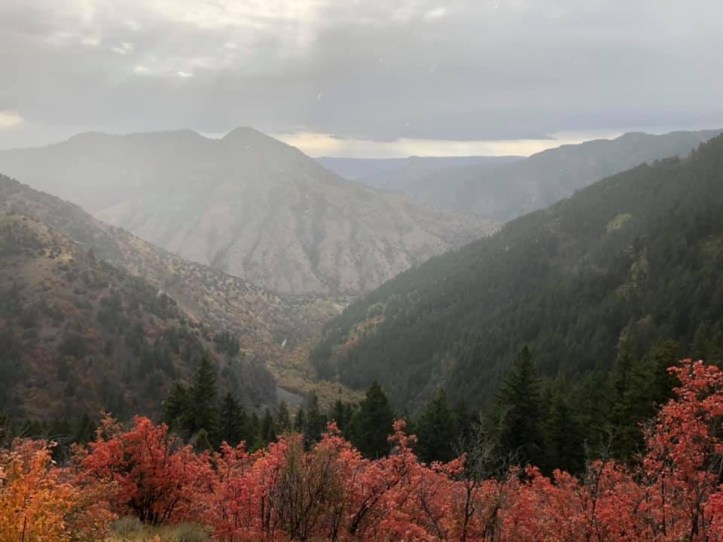
Leg 1 (6 AM to 6:50 PM -> 12:50 Hours) – Race starts with a biggest climb of the race (5000ft) in first 10 miles of the race and I started slow and easy keeping myself intentionally at the back of the pack runners. Sun came up in an hour and beautiful mountain landscape has emerged along with light drizzle. I thought this is the perfect day for running. It lightened up as we were running through beautiful red maple and aspen trees overlooking mountains and beautiful fall colors. Soon, I started feeling little headache when we were approaching Logan peak. I knew it must be altitude sickness and I ignored it there. Rain stopped and a nice rainbow emerged at the deep gorge between mountain ranges. The sight was absolutely beautiful and I took my time to absorb all of this natural beauty. Miles passed by from Logan Peak to Letham Hollow to Richard Hollow in no time. I had throbbing headache but nothing significant. After every aid station, there’s a constant pattern of climb and then downhill. Some of those climbs and downhills are really long stretches but I was feeling strong on climbs and downhills. I reminded myself on few points from time to time
- Walking uphills (even slightest)
- Running downhills but without sacrificing quads and with light stride and minimal effort
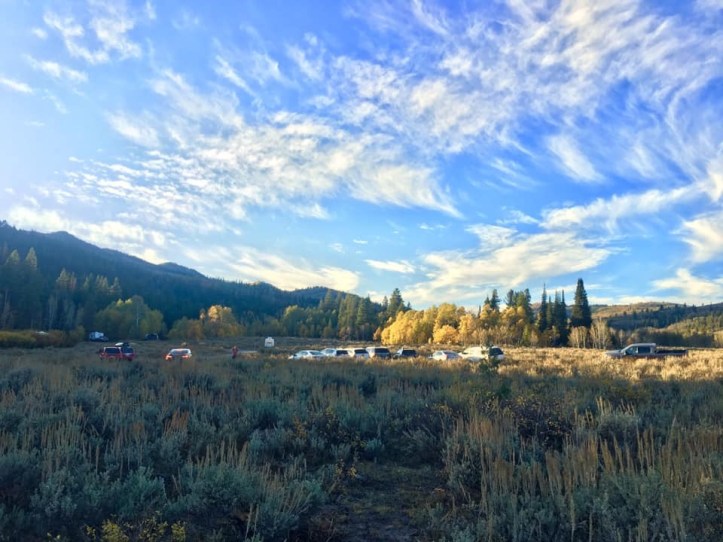
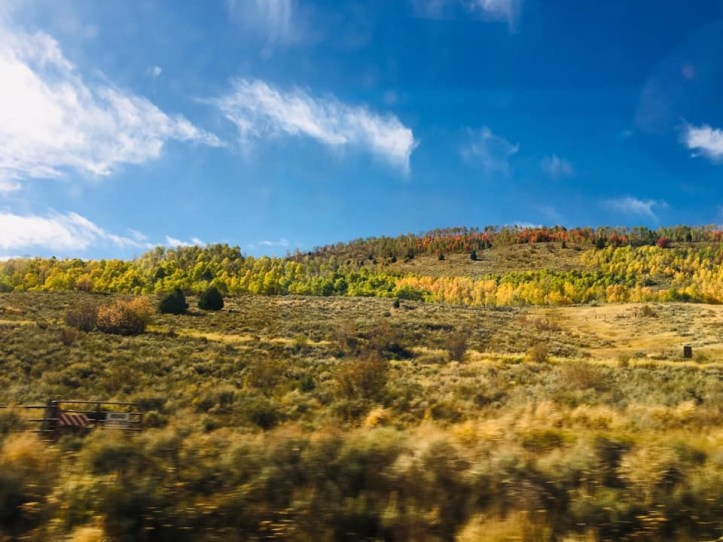
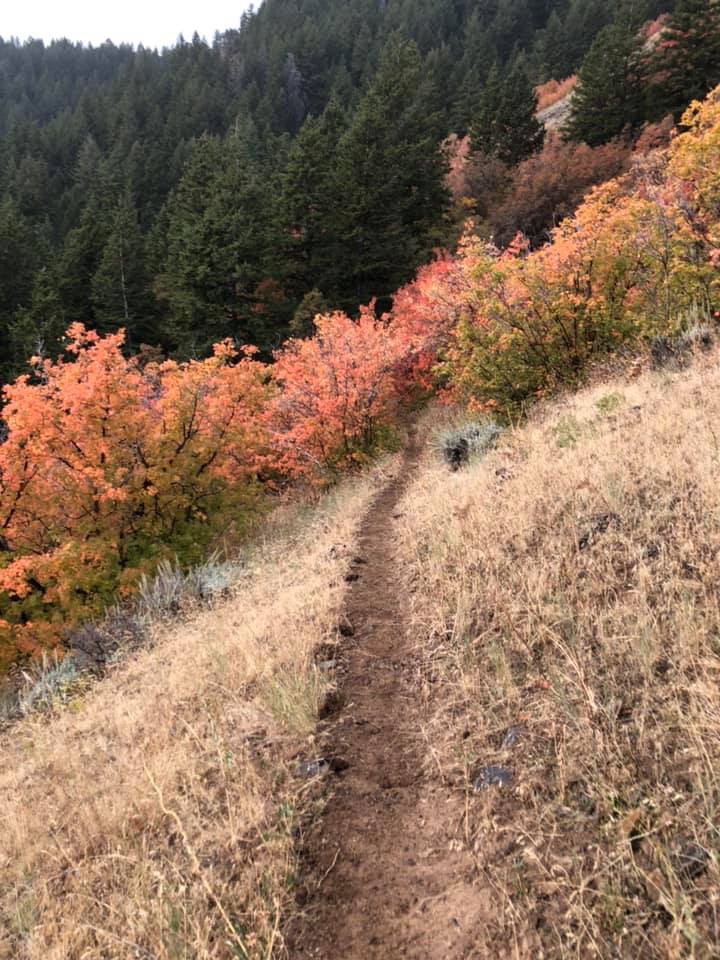
Sunaad had reminded me before race as not to bust my quads early on running hard on those downhills, as climb from Temple fork to Tony Grove is long and treacherous and it would expose all the runners who started out fast. I kept my pace very easy and comfortable and kept moving without spending any/much time at aids until Temple Fork. Some of us were leapfrogging each other and then I finally hooked onto one runner at Cowley Aid – Justin who is from SLC,UT and it was his first 100 miler. He looked strong and we trudged along almost together.
Leg 2 (6:50 PM to 5:50 AM -> 11 hours) – I reached temple fork few mins earlier than Justin and I changed my clothes from head to toe with fresh set and got my winter gear/headlamps and got ready for the night. It was getting colder and sun was almost setting in. I loaded up calories and got ready for long climb to Tony Grove which would be mostly in dark for me. Course marking in this section was almost nothing, probably only couple reflective markers and ~4 ribbons during the entire 7 mile section which were not so visible in headlamp. I was extremely watchful on the markers and by now I had got a grove of “bear-ly” marked course (as said by Chihping). There are long stretches where you won’t see any confidence ribbons but you have to trust your instincts and follow the trail. Sometimes there were many confusing sections especially one with down tree and found nowhere to go but cross over the large downed tree. I had GPX loaded on my watch (very useful) and also on GAIA app (which I never got to check during the race). I was feeling little sleepy in this section after sunset. I was soon amongst few other runners and we reached to Tony Grove. I took my time to load up the calories almost at every aid stations from here on generally with soup, hash-browns, cheese toast, fritos. I also got corn dog, hot chocolate and coffee which helped me stave off sleep. Here I was waiting at Tony Grove and was expecting to join another runner out of this aid but I couldn’t find anyone with whom I can take off and soon I was on the trail. All my night section was mostly running/hiking alone and I loved the night solitude. I was in my best form enjoying the stars and cold weather. Light rain started at this time and I put on my poncho. There is a long downhill in this section to Franklin. It got even colder and rain was on and off. I reached Franklin, shed my poncho as I thought it’s not raining anymore which turned out to be another big mistake. I also shed my poles there, changed my ultraspire’s battery, put on Garmin in charge mode, drank some soup, sat by fire for few mins while eating and then I left alone in the dark. I was confident that I would finish this race around 34 hours with the pace and my energy level. Little did I know that this section would change the race for so many of us with all the muddy downhills. It was quite cold out there and rain still didn’t make much impact until then. This section to Logan river has another steep long uphill and long downhill and this was going to turn race into miserable mud-fest. As I left Franklin, rain started intermittently and then even more and more with few strong spells. Some of the downhill sections were extremely slick and tricky which I found very difficult to move down without trekking poles. Logan River aid seemed too long and my winter jacket was all wet and heavy by now, my gloves were wet too. I was extremely cold and started shivering really bad even while moving (though very slow). I checked my watch and the downhill mile was more than 30 mins which was shocking for me. I felt even more colder as I couldn’t move fast enough on that slicky mud. There is a long fire road at the end of that muddy trail and we were all turned so desperate to reach aid while battling mud, incessant rain and cold. We reached Logan River finally and I was offered to sit by the fire. This was my lowest spot and had I not shaken up myself to move out of LR, it would have ended my race.
Leg 3 (5:50 AM to 5:20 PM -> 11:50 hours) – All the volunteers were simply amazing throughout the race. I was constantly shivering with cold here, my fingertips were painful with frost and my clothes were drenched with thick and sticky mud smelling cow dunk J Whatever I could eat was with those dirty hands with lots of bad smell. I got some real good grilled cheese and hot chocolate there despite knowing they may not have enough hot food at this aid. I spent more than 45-50 mins as I couldn’t muster enough courage to come out of that aid. The next climb was to Beaver mountain (highest point) which was supposed to be very cold. I knew had to go another 15 miles (2 aids) to get to my next drop bag with warm clothes at Beaver Creek (85Miles) which seemed an impossible task at the moment. I trash talked and constantly told myself that the only way I would DNF is when I am dead (no kidding J). Everybody was suffering with cold and rain at that aid. There is no way that rain or this cold will hold myself up from finishing the race. I decided to leave and amp up my efforts to generate enough body heat. I left that aid with another runner. I started pushing hard on uphill to keep myself warm. It was raining hard by then and rain and mud were making it more strenuous. I grabbed a stick there which helped me steer my way on slippery/muddy downhills. Downhills were very tricky almost in all the sections to the finish but that stick helped me balance and move confidently. Soon I started feeling strong and relatively warmer even with totally drenched clothes. The last .2 miles on the road to the Beaver lodge were not marked and many runners were struggling to find a way to go after glissading down from trail to road. Luckily, a car stopped by and driver showed us the direction. I reached Beaver Lodge where lot of runners were taking their time and sitting by fire. Unfortunately, the other runner that I started with from Logan river decided to drop at BL. I tried to wash off my mud with water faucet so that I could eat but it was just too thick and sticky. I left this aid very quickly without sitting by the fire. From here-on I just relied on electrolyte and I hardly spent few mins at aid stations except Beaver Creek (85). Long climb to Gibson basin, another cold spot but I was warm enough now as I was moving at a good pace. I moved in/out of Gibson basin to Beaver Creek (85 miles) where I changed my clothes and got some warm clothes from my drop bag. I had enough time to finish but with those slick downhills, I thought it would be a tight finish hence I left in couple minutes from here too without eating. When I reached Beaver Creek, I changed my clothes as quickly as possible, got my rain jacket on, filled my water bottles, got egg sandwich and moved out of aid. There is a long climb to Ranger Dip (another high point in the race) and by now almost all the trails and fire roads had become either ponds or running streams. On my way to ranger dip, weather turned even worse with thunder, more and more hails hitting my face and then snow came in. Bear left no stone unturned. I started pushing on and reached ranger dip. I moved through this aid in just a min by filling my electrolyte bottle. Last 7.5 miles with 600 ft of very steep uphill and then all downhills (but slippery). This steep uphill at 93rd mile reminded me of Diamond peak at TRT but I was so close to the finish that I thought there’s no way it would affect me a bit. Soon I joined another few runners and I met with a gentleman called – Charlie (a veteran with 17 Wasatch finishes and 3 Bear finishes). He showed me how he tackles those downhills and I started making good progress following him. These downhills were relatively easier than earlier downhills. I learnt moving on these slippery downhills in last 6 miles, better late than never J My legs felt strong and ran last couple miles on road while passing 8-10 runners.
When I turned right to the finish, all my emotions burst out, my eyes almost welled as I finished Bear feeling strong at just under 35:20 hours. Lots of blood and sweat has gone and I have finally earned qualifier for Hardrock and UTMB and a beautiful buckle and plaque.
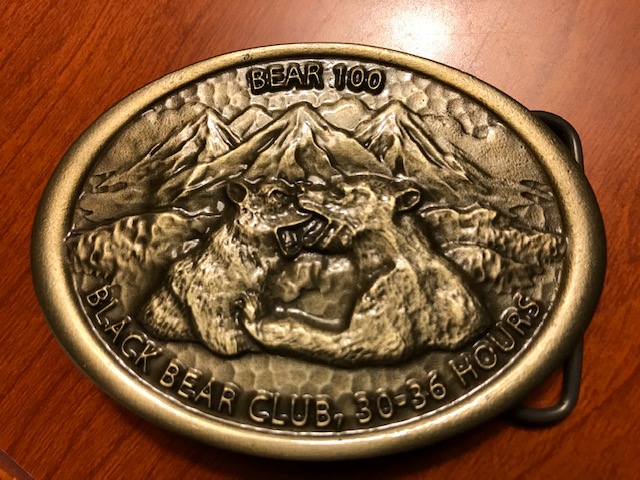
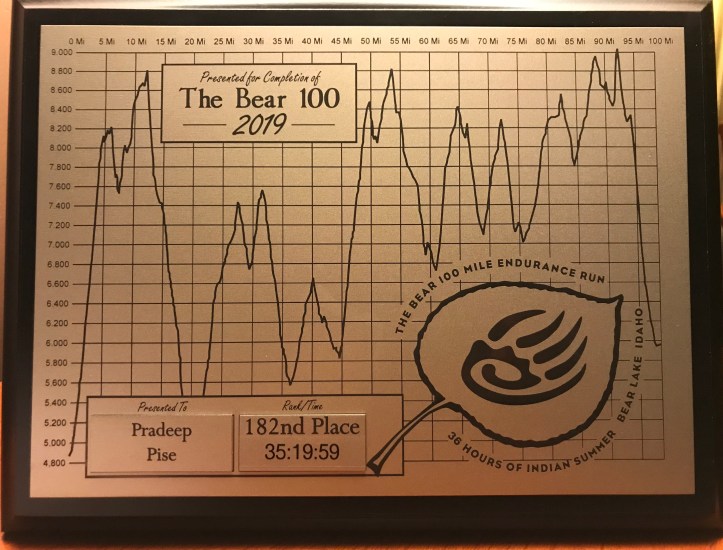
During the whole race, I felt very thankful to all my running friends (“Shades of Brown” and others) and community who helped me get stronger during the training with their company, their feedback, motivation, inspiration and faith in me. I remembered many advices that my brother has given me from time to time, learnings/feedback from my past chi-running coach Jeff Carnivale, the good luck charm that my daughter gave me, all the sacrifices and love by my dear wifey and most of all the pain of my parents while raising all of us.
What worked for me –
- My training gave me lot of confidence. There are no miracles and it’s extremely difficult to wing 100 miles races with lack of proper training
- Start slow and keep it consistent
- Less time at the Aids initially but keep efforts easy in the first half
- Good enough time at the aid to replenish after first 30 miles or so when glycogen dips
- Frequent walk breaks even if I wanted to run – kept my efforts in check
- Walking every uphill (even slightest) without fail and run downhills light. In the second half, I was feeling sleepy while walking on uphills, I tried jogging and this is how I managed to keep myself awake
- When discomfort kicked in – I employed mental strategies
- “Keep your mind open” – this lets me not focus on making decisions when negativity starts making rounds
- Aid to aid – Focusing on just next aid and not think about the entire duration, stay in the moment
- This is what I signed up for and I want it to be even harder
- There is no where to go so better to just hang in there and enjoy what I have at the moment
- Nutrition and hydration – Gels along with aid station food. I was on top of nutrition all along except last 20 miles or so. Whenever I felt low, I ate gel to get quick boost and used race electrolyte. No discomfort with moderate pace. I didn’t feel like taking salt tabs and took only two during the whole race
Major Gear – Most of my gear is non-branded. I strongly feel that running should be an inexpensive sport and don’t believe in brands unless I can’t leave without it so you won’t find most of the major brands here
- Vest – Salomon Adv 12 with 2 bottles
- Trekking poles – Black Diamond Z Trekking (I used these often but it didn’t lock before the race)
- Shoes (3) – Hoka EVO Speedgoat (2), Hoka Speedgoat 3, changed shoe only once at TF (45 miles)
- Arc’teryx goretex handgloves – piece of crap, I won’t suggest. I liked simple wal mart gloves
- Headlamps – Ultraspire 600 lumens Version 3.0 (extremely good, lasted 6 hours for me with med setting – 250 lumens, enough), Petzl Nao (lasted all night with med setting), Foxelli as a backup
- Gels – Huma Chia energy gels – I have become a big fan of it. I used it to give me a quick boost of energy whenever I felt low
- Salt tabs (saltchews) – used only two, didn’t need it this time
- Compression Short – Rabbit Compression
- Compression calf sleeves – 2XU compression performance calf sleeves, helps me control my plantar fasciitis pain
- Anti Chaffing – SNB (it was frozen during night, couldn’t use it), bodyGlide at the start, no chaffing
- Leukotape – taped feet including toes
- Socks – Drymax hyperthin, Injinji for spare, didn’t change my socks throughout the race
 Run Longer..